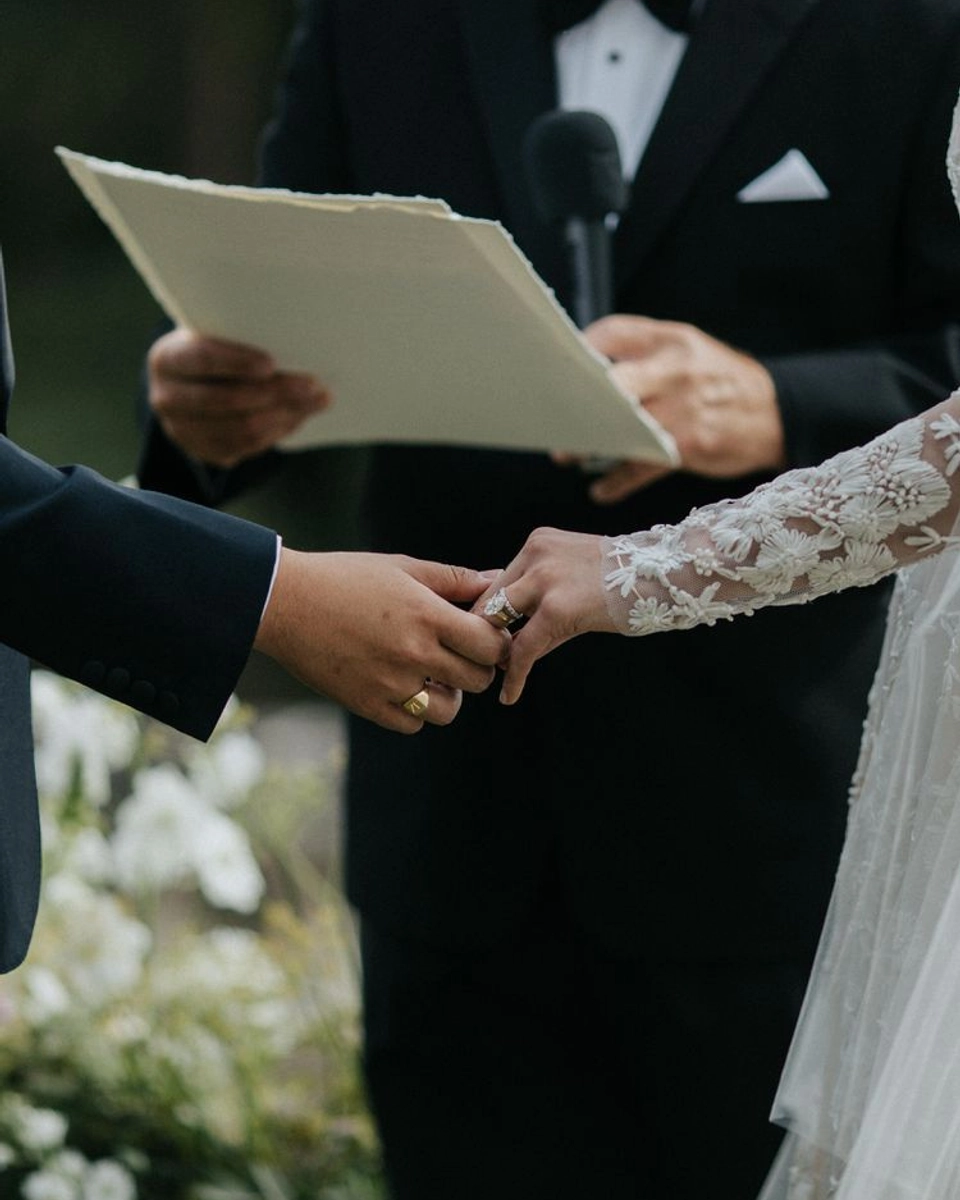

For many Malaysian couples, a wedding isn't complete without the prayers, rituals, and traditions that make it sacred. The good news? A religious ceremony at an authorised church or temple isn't just a spiritual celebration — it can also be a legally recognised marriage under Malaysian law.
The process runs a little differently from a standard JPN office registration, and it takes a bit more coordination. But for couples who want their union blessed in the space that matters most to them, it's absolutely worth it. Here's how it works, step by step.
How Religious Ceremonies Are Legally Recognised
Under the Law Reform (Marriage and Divorce) Act 1976 (Act 164), marriages at a church or temple are legally valid as long as the venue has an Assistant Registrar of Marriages officially appointed by the National Registration Department (JPN).
This means:
The religious ceremony IS the legal solemnisation — no separate civil signing is needed
The Assistant Registrar at your venue has the same legal authority as a JPN solemniser
Your marriage certificate is issued on the day of the ceremony itself
Step 1: Confirm Your Venue Is Authorised
Not every church or temple in Malaysia can legally register marriages. Only venues where JPN has officially appointed an Assistant Registrar of Marriages can conduct a recognised solemnisation.
Commonly authorised venues include:
Catholic and Protestant churches — most major established churches
Hindu temples — typically larger temples with resident priests
Buddhist and Taoist temples — usually well-established temples with community standing
Sikh gurdwaras — recognised gurdwaras with appointed registrars
Before you fall in love with a venue, contact them and ask:
Do you have an Assistant Registrar of Marriages appointed by JPN?
Is our preferred date available?
What are your requirements for couples wanting to get married here?
What are the fees involved? Deposit requirements and refund/cancellation policies?
Step 2: Understand the Venue's Pre-Marriage Requirements
Religious venues often have their own pre-marriage requirements that run in parallel with the JPN process. These are set by the religious institution, not JPN, and can take weeks or even months to complete — so don't leave them to the last minute.
Catholic Churches
Pre-Cana or marriage preparation course — usually 6 sessions over several weeks, or a single weekend course.
Baptism, Confirmation, and First Communion certificates from both parties (if applicable)
At least one partner must usually be Catholic (mixed-faith marriages require dispensation from the Bishop)
Some dioceses require applications 6 to 12 months in advance
Protestant Churches
Pre-marital counselling with the pastor, typically 3 to 6 sessions
Church membership — many churches require at least one partner to be a member or a regular attendee
Rehearsal and coordination with the church's worship team for hymns and music
Hindu Temples
Coordination with the temple priest (Pandit)
Astrological date selection — the priest may consult horoscopes to determine an auspicious date and time (muhurtham)
Specific ceremonial requirements and offerings, varying by tradition (Tamil, North Indian, etc.)
Ceremonies can run 2 to 4 hours or longer
Sikh Gurdwaras
Anand Karaj ceremony requirements
Both partners may need to be Sikh (or willing to convert), depending on the gurdwara's policy
The takeaway: Some requirements — especially Pre-Cana or Catholic dispensation paperwork — can take months to complete. Ask your venue for a full timeline upfront so you can plan your wedding date backwards from there.
Step 3: Book Your Venue and Secure the Date First
Once your venue is confirmed as authorised and you understand their requirements, book the date with the venue before doing anything with JPN.
Why in this order? Because:
Popular venues and dates fill up fast — 6 to 12 months in advance is common for churches, especially during peak wedding season (October to December)
Hindu and Chinese auspicious dates can be booked out a year or more ahead
JPN applications are only valid for 6 months, so applying too early risks your application expiring before your wedding
The Assistant Registrar's availability is set by the venue, not JPN
Step 4: Submit Your Marriage Application at JPN
Once your venue and date are locked in, it's time for the legal paperwork. Some venues have admin personnel who will assist with paperwork. Otherwise, both partners must go in person to the JPN office matching your MyKad address.
Important: Church and temple applications are handled at the JPN counter, not through the online OSKC portal. This is because the solemnisation side requires coordination with your venue's registrar, which sits outside the online system.
What to Bring
Completed Form JPN.KC02 — obtain the original hardcopy from JPN counters (printed online forms are for reference only and won't be accepted)
Original MyKads + photocopies for both partners
One passport-sized photo per applicant
Decree nisi absolute (original + copy) if either of you is previously divorced
Death certificate of previous spouse (original + copy) if either of you is widowed
Approval letter from Head of Department if either of you serves in the armed forces or PDRM
What Happens at the Counter
Both of you submit the completed form and documents
JPN verifies your details and documentation
You pay the RM 20 marriage certificate fee
JPN stamps Form JPN.KC02 and issues a payment receipt
Your notice of marriage is posted publicly at JPN
The stamped Form JPN.KC02 and payment receipt are your legal proof that the application has been submitted. These are what authorise your venue to perform the solemnisation.
Step 5: Bring the Stamped Form to Your Venue
Hand over the stamped Form JPN.KC02 and the payment receipt to your church or temple. With these, the venue will officially confirm your booking with their Assistant Registrar of Marriages.
Step 6: Serve the 21-Day Notice Period
Just like any other marriage under Act 164, your notice of marriage will be displayed publicly at JPN for at least 21 full days. This window allows anyone with a legal objection to come forward.
In practical terms:
Your wedding date must be at least 22 days after your JPN application
Your application stays valid for 6 months from submission
Aim to apply about 3to 4 months before your wedding — enough time to clear the notice period comfortably, without cutting too close to the 6-month expiry
Step 7: Complete Your Pre-Ceremony Requirements
While the 21-day notice period runs at JPN, focus on completing everything your venue requires. This is typically the longest and most involved part of the whole process.
Common items include:
Pre-marriage counselling sessions with the priest, pastor, or venue representative
Rehearsal with the officiant, usually a week or a few days before the wedding
Religious rites — confirmations, purifications, preparatory blessings
Venue paperwork — membership forms, parish transfer letters, dispensation requests
Vendor coordination — confirming florists, musicians, photographers, and cultural performers are approved by your venue
Step 8: Prepare for Your Solemnisation Day
As the day approaches, make sure you have these essentials sorted.
For the Couple
Original MyKads (both partners) — no copies, no laminated versions, no exceptions
Your part of the ceremony script or vows
Wedding rings (if you're exchanging them)
Appropriate ceremonial attire — varies by faith: wedding gown and suit for Christian weddings, saree and veshti for Hindu ceremonies, kua or modern formalwear for Chinese ceremonies
For Your Two Witnesses
Anyone aged 21 or above — family or close friends of any nationality
Witnesses must bring original MyKad (Malaysians) or Passport (foreigners). Brief them on where they need to be at each stage
Step 9: The Ceremony and Legal Solemnisation
On the day itself, the Assistant Registrar of Marriages appointed by your venue will guide you through both the religious ceremony and the legal solemnisation. These are woven together into one seamless event.
Here's what's involve:
Identification verification — the Assistant Registrar checks the MyKads of the couple and both witnesses before proceeding
Signing of the marriage certificate — the couple and both witnesses sign the official certificate, guided by the Assistant Registrar. Depending on the tradition, this happens after vows, during the exchange, or near the end
Official pronouncement — the Assistant Registrar formally pronounces you husband and wife under Malaysian law
Certificate issuance — your marriage certificate is handed over on the spot. You are now legally married.
Step 10: Your Marriage Is Officially Registered
A copy of your signed marriage certificate is submitted back to JPN for the national records, while you keep the original (typically handles by the admin personnel but best to confirm with your venue). If you ever need additional certified copies — for visa applications, property transactions, or insurance — you can request them from JPN for a small fee.
Understanding the Fees
There are two layers to budget for:
JPN fees:
Item | Fee |
|---|---|
Marriage certificate | RM 20 |
Important Reminders
Book the venue first, apply to JPN second — the venue's date dictates everything else
Bring the stamped Form JPN.KC02 to your venue — without it, the Assistant Registrar can't legally solemnise your marriage
The 21-day notice period is non-negotiable — plan around it
Your application is valid for 6 months — you may book your venue earlier but you don't have to start the civil application too early
The Bottom Line
Getting married at a church or temple gives you the best of both worlds: a deeply meaningful ceremony that reflects your faith and family traditions, and a legally binding marriage recognised across Malaysia. The process takes a bit more coordination than a simple JPN office signing, but for couples who want their wedding to feel truly sacred, the extra effort is more than worth it.
For the complete JPN application process and general marriage registration requirements, head back to our main guide: [Marriage Registration in Malaysia: A Step-by-Step Guide].